Who dated Julius Caesar?
Postumia dated Julius Caesar from ? until ?.
Postumia dated Julius Caesar from ? until ?.
Mamurra dated Julius Caesar from ? until ?.
Mucia Tertia dated Julius Caesar from ? until ?.
Lollia dated Julius Caesar from ? until ?.
Servilia dated Julius Caesar from ? until ?.
Cossutia dated Julius Caesar from ? until ?.
Sempronia dated Julius Caesar from ? until ?.
Eunoë dated Julius Caesar from ? until ?.
Clodia dated Julius Caesar from ? until ?.
Tertulla dated Julius Caesar from ? until ?.
Nysa dated Julius Caesar from ? until ?.
Cleopatra dated Julius Caesar from until . The age gap was 30 years, 6 months and 10 days.
Julius Caesar

Gaius Julius Caesar (12 or 13 July 100 BC – 15 March 44 BC) was a Roman general, statesman, and author who was the dictator of the Roman Republic almost continuously from 49 BC until his assassination in 44 BC. A member of the First Triumvirate, he led the Roman armies through the Gallic Wars and defeated his political rival Pompey in Caesar's civil war. He consolidated power and proclaimed himself dictator for life in 44 BC, helping create the political conditions that led to the collapse of the Roman Republic and the emergence of the Roman Empire. For his role in these events, he is regarded as one of history's most influential figures.
In 60 BC, Caesar, Crassus, and Pompey formed the First Triumvirate, an informal political alliance that dominated Roman politics for several years. Their attempts to amass political power were opposed by many in the Senate, including Cato the Younger with the private support of Cicero. Caesar rose to become one of the most powerful politicians in the Roman Republic through a string of military victories in the Gallic Wars, completed by 51 BC, which greatly expanded Roman territory. During this time, he invaded Britain and built a bridge across the Rhine. These achievements, along with the loyalty of his veteran army, threatened to eclipse the standing of Pompey. The alliance between Caesar and Pompey slowly broke down and, by 50 BC, Pompey had realigned himself with the Senate. With his command expiring and the Gallic Wars largely concluded, the Senate ordered Caesar to relinquish his military command and return to Rome. In early January 49 BC, Caesar openly defied the Senate by crossing the Rubicon and marching towards Rome at the head of an army. This act began Caesar's civil war, which he won, leaving him in a position of near-unchallenged power and influence in 45 BC.
After assuming control of government and pardoning many of his enemies, Caesar carried out various reforms and public works. He created the Julian calendar to replace the republican lunisolar calendar, reduced the size of the grain dole, settled his veterans in new overseas colonies, greatly increased the size of the Senate, and extended citizenship to communities in Spain and what is now northern Italy. In early 44 BC, he was proclaimed "dictator for life". Fearful of his power, his domination of the state, and the possibility that he might make himself king, a group of senators led by Brutus and Cassius assassinated Caesar on the Ides of March (15 March) 44 BC. A new series of civil wars broke out and the constitutional government of the Republic was never fully restored. Caesar's great-nephew and adoptive heir Octavian, later known as Augustus, rose to sole power after defeating his opponents thirteen years later. Octavian then set about consolidating his power, transforming the Republic into the Roman Empire as its first emperor.
Caesar was an accomplished author and commentator; much of his life is known through his own accounts of his military campaigns. Other contemporary sources include the letters and speeches of Cicero and the historical writings of Sallust. Later biographies of Caesar by Suetonius and Plutarch are also important sources. Caesar is considered by many historians to be one of the greatest military commanders in history. His cognomen subsequently became a synonym for emperor; the title Caesar was used throughout the Roman Empire, and gave rise to modern derivatives such as Kaiser and Tsar. He has frequently appeared in literary and artistic works.
Read more...Postumia
Julius Caesar
Postumia
Postumia was an ancient Roman woman of the late Roman Republic, she was the wife of Roman lawyer Servius Sulpicius Rufus and a mistress of Julius Caesar.
Read more...Julius Caesar
Mamurra
Mamurra (fl. 1st century BC) was a Roman military officer who served under Julius Caesar.
Read more...Julius Caesar
Mucia Tertia
Múcia Tércia (em latim Mucia Tertia) foi uma matrona romana que viveu no século I a.C. Era filha de Quinto Múcio Cévola, pontífice máximo (pontifex maximus),[carece de fontes?] assassinado pela facção de Caio Mário em 86 a.C., e de Licínia Crassa, que se divorciou do seu pai para se casar com Quinto Cecílio Metelo Nepos, num escândalo mencionado em várias fontes. O seu nome indica que era uma terceira filha, de acordo com a convenção romana de nomes.
O primeiro marido de Múcia Tércia foi Caio Mário, o Jovem, cônsul em 82 a.C. no pico da guerra civil contra os Optimates liderados por Lúcio Cornélio Sula. Pouco depois, o conflito acabou com o suicídio do jovem Mário e com a vitória de Sulla. Múcia, como viúva de um proscrito, ficou proibida de voltar a casar. No entanto, em 81 a.C., Sula mudou de ideias e patrocinou o seu casamento com Pompeu. Desta união nasceram três crianças: Pompeu, o Jovem,[carece de fontes?] Sexto Pompeu e Pompéia Magna (que casou-se com Fausto Cornélio Sula).
Entre 76 e 61 a.C., Pompeu passou muito tempo fora de Roma, combatendo os piratas do Mediterrâneo, a rebelião de Sertório na Hispânia e o rei Mitrídates VI do Ponto. Quando regressou definitivamente a casa, enviou uma carta de divórcio a Mucia Tertia; Plutarco menciona uma correspondência pessoal de Cícero que teria o motivo desta separação. Múcia Tércia desaparece então das fontes e a data da sua morte é incerta. Muitas fontes afirmam que Júlio César era amante de Múcia, e, portanto, o pivô dessa separação.
Read more...Julius Caesar
Lollia
Julius Caesar
Servilia

Servilia (c. 100 BC – after 42 BC) was a Roman matron from a distinguished family, the Servilii Caepiones. She was the daughter of Quintus Servilius Caepio and Livia, thus the maternal half-sister of Cato the Younger. She married Marcus Junius Brutus, with whom she had a son, the Brutus who, along with others in the Senate, assassinated Julius Caesar. After her first husband's death in 77 BC, she married Decimus Junius Silanus, and with him had a son and three daughters.
She gained fame as the mistress of Julius Caesar, whom her son Brutus and son-in-law Gaius Cassius Longinus would assassinate in 44 BC. Her affair with Caesar seems to have been publicly known in Rome at the time. Plutarch stated that she in turn was madly in love with Caesar. The relationship between the two probably started in 59 BC, after the death of Servilia's second husband although Plutarch implied it began when they were teenagers.
Read more...Julius Caesar
Cossutia

Cossutia (Ier siècle av. J.-C.) est une femme romaine noble du Ier siècle av. J.-C.
Read more...Julius Caesar
Sempronia

Julius Caesar
Eunoë

Eunoë Maura was the wife of Bogudes, King of Western Mauretania. Her name has also been spelled Euries or Euryes or Eunoa.
Read more...Julius Caesar
Clodia

Clodia (born Claudia; c. 94/95 BC), nicknamed Quadrantaria ("Quarter", from quadrantarius, the price of a visit to the public baths), Nola ("The Unwilling", from the verb nolo, in sarcastic reference to her alleged wantonness), Medea Palatina ("Medea of the Palatine") by Cicero (see below), and occasionally referred to in scholarship as Clodia Metelli ("Metellus's Clodia"), was one of three known daughters of the ancient Roman patrician Appius Claudius Pulcher.
Like many other women of the Roman elite, Clodia was very well-educated in Greek and philosophy, with a special talent for writing poetry. Her life, which was characterized by perpetual scandal, is immortalized in the writings of Marcus Tullius Cicero and, it is generally believed, in the poems of Gaius Valerius Catullus.
Read more...Julius Caesar
Tertulla
Tertulla was the wife of Marcus Licinius Crassus, "the richest man in Rome", and the mother of his two sons.
Read more...Julius Caesar
Nysa
Ниса (др.-греч. Νύσα) — дочь царя Вифинии Никомеда IV (по другим, видимо, устаревшим сведениям — Никомеда III), жившая в I веке до н. э.
Read more...Julius Caesar
Cleopatra
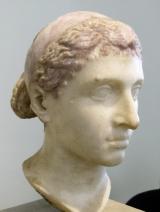
Cleopatra VII Thea Filopátor —en griego antiguo: Κλεοπᾰ́τρᾱ Φιλοπάτωρ, romanizado: Kleopátrā Philopátōr— (69 a. C.-10 o 12 de agosto de 30 a. C.), conocida como Cleopatra, fue la última gobernante de la dinastía ptolemaica del Antiguo Egipto, aunque nominalmente la sucedió como faraón su hijo Cesarión. También fue diplomática, comandante naval, lingüista y escritora de tratados médicos. Era descendiente de Ptolomeo I Sóter, fundador de la dinastía ptolemaica, un general grecomacedonio de Alejandro Magno. Tras su muerte, Egipto se convirtió en provincia del Imperio romano, lo que marcó el final del período helenístico que se había iniciado con el reinado de Alejandro (336-323 a. C.). Aunque su lengua materna era la koiné griega, fue la primera soberana ptolemaica en aprender el idioma egipcio.En 58 a. C. presuntamente acompañó a su padre, Ptolomeo XII, durante su exilio en Roma tras una revuelta en Egipto (para entonces un Estado cliente de Roma), lo que permitió que su hermana mayor, Berenice IV, reclamara el trono de Ptolomeo. Berenice murió en batalla en 55 a. C., cuando su padre volvió a Egipto con ayuda militar romana. Cuando Ptolomeo murió en 51 a. C., Cleopatra y su hermano menor, Ptolomeo XIII, accedieron al trono como corregentes, pero la ruptura entre ambos desató una guerra civil.
Tras la derrota sufrida por el estadista romano Pompeyo el Grande en 48 a. C. en la batalla de Farsalia por parte de su rival Julio César durante la segunda guerra civil romana, Pompeyo huyó a Egipto, ya que había sido aliado político del padre de Ptolomeo XIII y Cleopatra, pero a sugerencia de los eunucos de la corte, Ptolomeo XIII ordenó emboscar y asesinar a Pompeyo mientras César ocupaba Alejandría en persecución de su enemigo. Como cónsul de la República romana, César trató de reconciliar a Ptolomeo XIII con su hermana Cleopatra, pero Potino el Eunuco, consejero principal del monarca egipcio, creía que los términos que proponía el cónsul beneficiaban a Cleopatra, por lo que sus fuerzas sitiaron a César y Cleopatra en Alejandría. El asedio se levantó gracias a la llegada de aliados de César a comienzos de 47 a. C. y Ptolomeo XIII murió poco después en la batalla del Nilo. Arsínoe IV, media hermana de Cleopatra que había liderado el asedio, se exilió en Éfeso. César, ya elegido dictador, declaró a Cleopatra y a su hermano menor Ptolomeo XIV cogobernantes de Egipto. Sin embargo, el general romano inició una relación sentimental privada con Cleopatra de la que nació Cesarión. Cleopatra viajó a Roma en los años 46 y 44 a. C. como reina vasalla y se alojó en la villa de César. Cuando este fue asesinado en 44 a. C., Cleopatra intentó que su hijo fuera designado heredero, pero no pudo debido al ascenso al poder de Octavio (posteriormente conocido como Augusto, quien sería el primer emperador de Roma en 27 a. C.). Entonces, Cleopatra ordenó asesinar a su hermano Ptolomeo XIV y elevó a su hijo Cesarión como corregente de Egipto, con el nombre de Ptolomeo XV.
Durante la tercera guerra civil de la República romana (43-42 a. C.), Cleopatra se alió con el Segundo Triunvirato, formado por Octavio (sobrino nieto y heredero de César), Marco Antonio y Lépido. Tras su encuentro en Tarso en 41 a. C., la gobernante egipcia inició una relación con Marco Antonio de la que nacieron tres hijos: Alejandro Helios, Cleopatra Selene II y Ptolomeo Filadelfo. Antonio usó su autoridad como triunviro para ejecutar a Arsínoe IV, cumpliendo el deseo de Cleopatra, y se apoyó cada vez más en la reina egipcia tanto para obtener financiación como ayuda militar durante sus invasiones del imperio parto y del Reino de Armenia. En las Donaciones de Alejandría, los hijos de Cleopatra con Marco Antonio fueron nombrados gobernantes sobre varios territorios bajo la autoridad de Antonio. Este hecho, unido al matrimonio de Marco Antonio con Cleopatra después de su divorcio de Octavia la Menor, hermana de Octavio, desató la cuarta guerra civil de la República romana. Después de iniciar una guerra de propaganda, Octavio forzó a huir a los aliados de Antonio en el senado romano y le declaró la guerra a Cleopatra en 32 a. C. La flota de guerra de Marco Antonio y Cleopatra fue derrotada por la de Octavio, bajo el mando de su general Agripa, en la batalla de Accio en 31 a. C., tras lo cual las tropas romanas de Octavio invadieron Egipto en 30 a. C. y derrotaron a las de Antonio, tras lo cual éste se suicidó. Cuando Cleopatra se enteró de que Octavio pretendía llevarla a Roma para exhibirla durante su procesión de triunfo, también se suicidó tomando veneno, si bien popularmente se cree que lo hizo dejándose morder por un áspid.
El legado de Cleopatra permanece en numerosas obras de arte, tanto antiguas como modernas y numerosas dramatizaciones de su vida en la literatura y otros medios. Varias obras de la historiografía romana y la poesía latina retratan a la reina de Egipto, generalmente brindando una perspectiva negativa y polémica de su semblanza, perspectiva que pervivió en la literatura medieval y renacentista. Las artes visuales de la antigüedad representaron a Cleopatra en monedas romanas y ptolemaicas, esculturas, bustos, relieves, vasijas de cristal, camafeos y pinturas. Fue tema de muchas obras del arte renacentista y barroco, como esculturas, pinturas, poemas y obras de teatro como Antonio y Cleopatra (1608), de William Shakespeare, y óperas como Julio César en Egipto (1724), de Händel. En tiempos recientes, ha aparecido tanto en bellas artes como en artes aplicadas, en sátiras burlescas, en películas de Hollywood como Cleopatra (1963) interpretada por Elizabeth Taylor, o como imagen de marcas comerciales, por lo que desde el siglo XIX es un icono pop de la «egiptomanía».
Read more...