Who dated Angie Dickinson?
Frank Sinatra dated Angie Dickinson from ? until ?. The age gap was 15 years, 9 months and 18 days.
John F. Kennedy dated Angie Dickinson from ? until ?. The age gap was 14 years, 4 months and 1 days.
Angie Dickinson

Angie Dickinson, née Angeline Brown, est une actrice américaine, née le à Kulm (Dakota du Nord).
Read more...Frank Sinatra
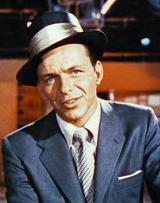
Francis Albert Sinatra (; December 12, 1915 – May 14, 1998) was an American singer and actor. Nicknamed the "Chairman of the Board" and "Ol' Blue Eyes", he is regarded as one of the most popular entertainers of the 20th century.
Born to Italian immigrants in Hoboken, New Jersey, Sinatra began his musical career in the swing era. He joined the Harry James band as the vocalist in 1939 before finding success as a solo artist after signing with Columbia Records four years later, becoming the idol of the "bobby soxers". In 1946, Sinatra released his debut album, The Voice of Frank Sinatra. He then signed with Capitol Records and released several albums with arrangements by Nelson Riddle, notably In the Wee Small Hours (1955) and Songs for Swingin' Lovers! (1956). In 1960, Sinatra left Capitol Records to start his own record label, Reprise Records, releasing a string of successful albums. He collaborated with Count Basie on Sinatra-Basie: An Historic Musical First (1962) and It Might as Well Be Swing (1964). In 1965, he recorded September of My Years and starred in the Emmy-winning television special Frank Sinatra: A Man and His Music. After releasing Sinatra at the Sands the following year, Sinatra recorded one of his most famous collaborations with Tom Jobim, Francis Albert Sinatra & Antonio Carlos Jobim. It was followed by 1968's Francis A. & Edward K. with Duke Ellington. Sinatra retired in 1971 following the release of "My Way" but came out of retirement two years later. He recorded several albums and released "New York, New York" in 1980. Sinatra is among the world's best-selling music artists, with an estimated 150 million record sales globally.
Sinatra also forged a highly successful acting career. After winning the Academy Award for Best Supporting Actor for From Here to Eternity (1953), he starred in The Man with the Golden Arm (1955) and The Manchurian Candidate (1962). Sinatra also appeared in musicals such as On the Town (1949); Guys and Dolls (1955); High Society (1956); and Pal Joey (1957), the last of which won him a Golden Globe Award. Toward the end of his career, Sinatra frequently played detectives, including the title character in Tony Rome (1967) and the titular The Detective (1968). He received the Golden Globe Cecil B. DeMille Award in 1971. Sinatra also directed the anti-war drama None but the Brave (1965). On television, The Frank Sinatra Show began on CBS in 1950, and Sinatra continued to make appearances on television throughout the 1950s and 1960s.
Sinatra was recognized at the Kennedy Center Honors in 1983, awarded the Presidential Medal of Freedom in 1985, and received the Congressional Gold Medal in 1997. He earned 11 Grammy Awards, including the Grammy Trustees Award, Grammy Legend Award, and the Grammy Lifetime Achievement Award. American music critic Robert Christgau called Sinatra "the greatest singer of the 20th century" and he continues to be regarded as an iconic figure.
Read more...Angie Dickinson
John F. Kennedy

John Fitzgerald Kennedy (May 29, 1917 – November 22, 1963), also known as JFK, was the 35th president of the United States, serving from 1961 until his assassination in 1963. He was the youngest person elected president, at 43 years, and the first Catholic president. Kennedy served at the height of the Cold War, and the majority of his foreign policy concerned relations with the Soviet Union and Cuba. A member of the Democratic Party, Kennedy represented Massachusetts in both houses of the United States Congress before his presidency.
Born into the prominent Kennedy family in Brookline, Massachusetts, Kennedy graduated from Harvard University in 1940, joining the U.S. Naval Reserve the following year. During World War II, he commanded PT boats in the Pacific theater. Kennedy's survival following the sinking of PT-109 and his rescue of his fellow sailors made him a war hero and earned the Navy and Marine Corps Medal, but left him with serious injuries. After a brief stint in journalism, Kennedy represented a working-class Boston district in the U.S. House of Representatives from 1947 to 1953. He was subsequently elected to the U.S. Senate, serving as the junior senator from Massachusetts from 1953 to 1960. While in the Senate, Kennedy published his book Profiles in Courage, which won a Pulitzer Prize. Kennedy ran in the 1960 presidential election. His campaign gained momentum after the first televised presidential debates in American history, and he was elected president, narrowly defeating Republican opponent Richard Nixon, the incumbent vice president.
Kennedy's presidency saw high tensions with communist states in the Cold War. He increased the number of American military advisers in South Vietnam, and the Strategic Hamlet Program began during his presidency. In 1961, he authorized attempts to overthrow the Cuban government of Fidel Castro in the failed Bay of Pigs Invasion and Operation Mongoose. In October 1962, U.S. spy planes discovered Soviet missile bases had been deployed in Cuba. The resulting period of tensions, termed the Cuban Missile Crisis, nearly resulted in nuclear war. In August 1961, after East German troops erected the Berlin Wall, Kennedy sent an army convoy to reassure West Berliners of U.S. support, and delivered one of his most famous speeches in West Berlin in June 1963. In 1963, Kennedy signed the first nuclear weapons treaty. He presided over the establishment of the Peace Corps, Alliance for Progress with Latin America, and the continuation of the Apollo program with the goal of landing a man on the Moon before 1970. He supported the civil rights movement but was only somewhat successful in passing his New Frontier domestic policies.
On November 22, 1963, Kennedy was assassinated in Dallas. His vice president, Lyndon B. Johnson, assumed the presidency. Lee Harvey Oswald was arrested for the assassination, but he was shot and killed by Jack Ruby two days later. The Federal Bureau of Investigation (FBI) and the Warren Commission both concluded Oswald had acted alone, but conspiracy theories about the assassination persist. After Kennedy's death, Congress enacted many of his proposals, including the Civil Rights Act of 1964 and the Revenue Act of 1964. He ranks highly in polls of U.S. presidents with historians and the general public. His personal life has been the focus of considerable sustained interest following public revelations in the 1970s of his chronic health ailments and extramarital affairs. Kennedy is the most recent U.S. president to have died in office.
Read more...