Who dated Arib al-Ma'muniyya?
Arib al-Ma'muniyya
Arīb al-Ma'mūnīya (en arabe : عريب المأمونية, née en 181/797-98 et morte en 277/890-91, est une qayna (femme formée aux arts du divertissement) du début de la période abbasside, qui a été qualifiée de « plus célèbre chanteuse esclave à avoir jamais résidé à la cour de Bagdad ». Elle a vécu jusqu'à 96 ans et sa carrière s’étend sur les règnes de cinq califes.
Read more...Al-Amin
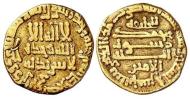
Abū Mūsā Muḥammad bin Hārūn al-Amīn (Arabic: أبو موسى محمد بن هارون الأمين; April 787 – 24/25 September 813), better known by just his laqab of al-Amīn (Arabic: الأمين, lit. 'the Trustworthy'), was the sixth Abbasid caliph from 809 to 813.
Al-Amin succeeded his father, Harun al-Rashid, in 809 and ruled until he was deposed and killed in 813, during the civil war by his half-brother, al-Ma'mun.
Read more...Arib al-Ma'muniyya
al-Maʾmun
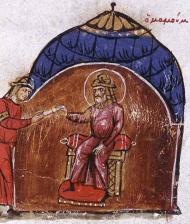
Abū al-ʿAbbās Abd Allāh ibn Hārūn al-Maʾmūn (Arabic: أبو العباس عبد الله بن هارون الرشيد, romanized: Abū al-ʿAbbās ʿAbd Allāh ibn Hārūn ar-Rashīd; 14 September 786 – 9 August 833), better known by his regnal name al-Ma'mun (Arabic: المأمون, lit. 'the Reliable'), was the seventh Abbasid caliph, who reigned from 813 until his death in 833. His leadership was marked by the power and prosperity of the Abbasid Caliphate. Al-Ma'mun promoted the Graeco-Arabic translation movement, the flowering of learning and the sciences in Baghdad, and the publishing of al-Khwarizmi's book now known as "Algebra", making him one of the most important caliphs in the Islamic Golden Age. He is also known as a proponent of the rational Islamic theology of Mu'tazilism.
Al-Ma'mun succeeded his half-brother al-Amin after a civil war, much of his reign was spent on peace campaigns. His strong support for Mu'tazilism and the people of Kalam led him to persecute the supporters of Hadith and imprison a Sunni Imam, Ahmad ibn Hanbal in an event that became known as the Mihna. Al-Ma'mun's foreign policy was due to his decision to continue war and diplomatic relations with the Byzantine Empire, the tension between conflict or diplomacy varying during his military campaigns.
Read more...